Blog
Manufacturability insights for product designers. Practical guides on STEP files, materials, and getting parts made right the first time.
Do You Need to Hire a DFM Engineer Before You Commit to a Mold?
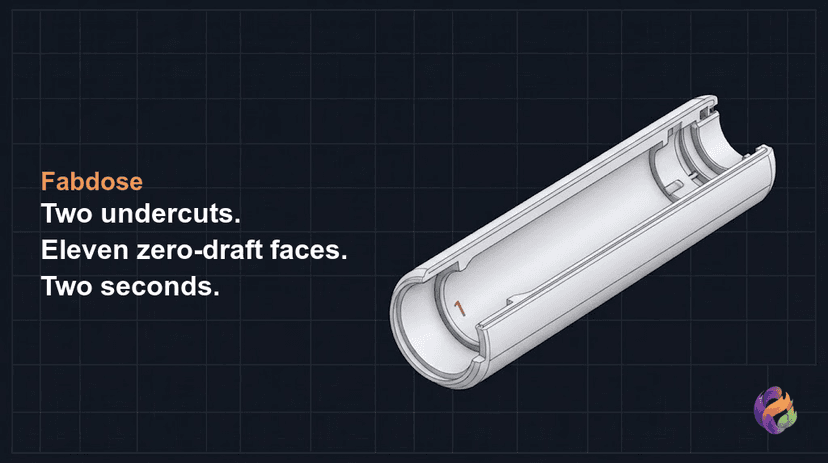
Whether a part has an obvious geometric problem is a measurement, not a hire. On one test part the check named two undercut faces, eleven zero-draft faces and three thick sections in about two seconds, and swapping the material moved none of it.
Where Is the Thick Section on This Part?
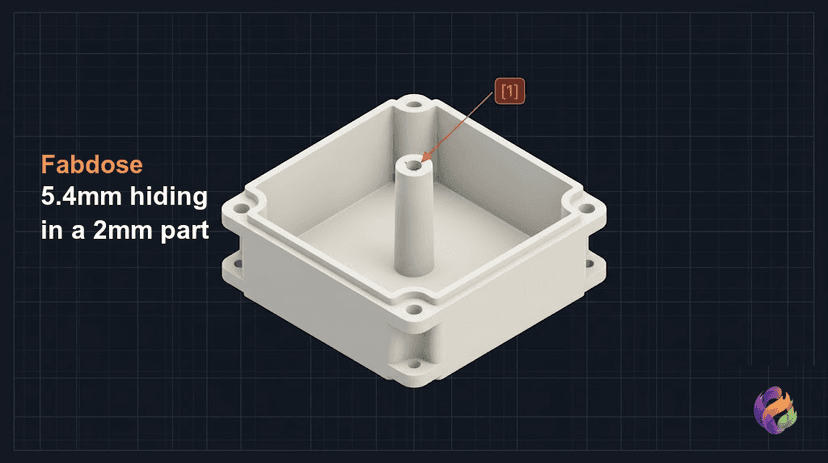
A 2mm charging base with a 5.4mm spot in it. The whole-part wall thickness number reads 12.157mm, which is no wall on the part. The per-face check names face 0 and face 28, and the sink mark risk they drive goes away when you core them out.
Which Way Should the Mold Open on This Part?
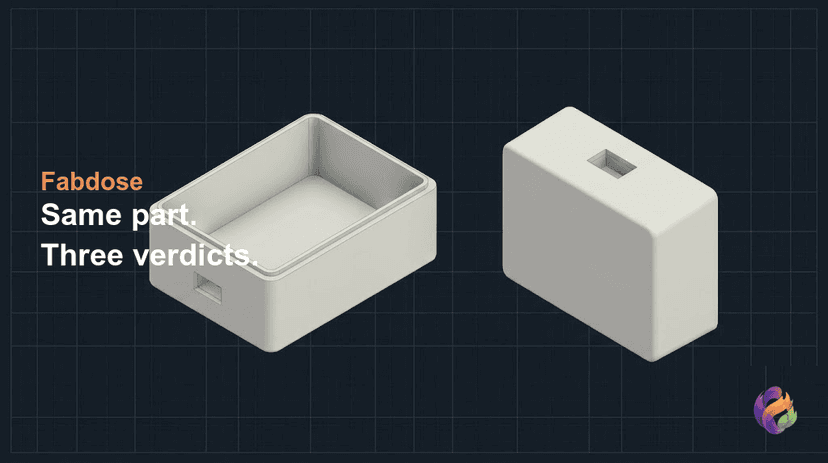
One sensor housing, one STEP file, three orientations. The same 786.5 square mm side wall reports 2.0 degrees of draft in one run, 0.0 in the second, and a 2.0 degree undercut in the third. The tooling estimate goes from $14,000 to $90,000.
Which Way Should an Interior Rib Taper?
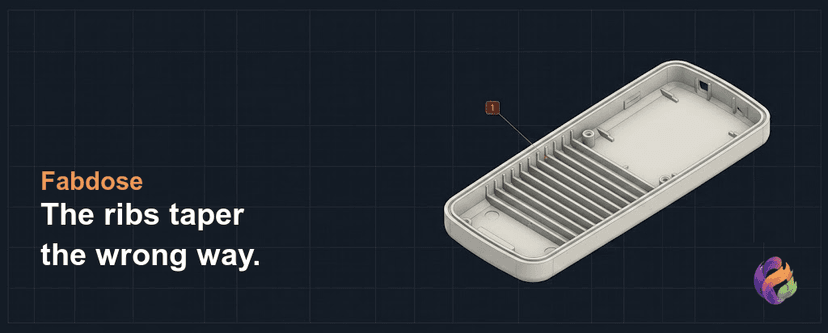
Five interior ribs on one remote-control shell, run four ways. Flip the 2 degree taper and the same rib faces stop reporting insufficient draft and start reporting undercuts, and the tooling tier in the cost summary goes from $1,500 to $50,000.
How Much Draft Does a Feature on an Angled Face Actually Need?
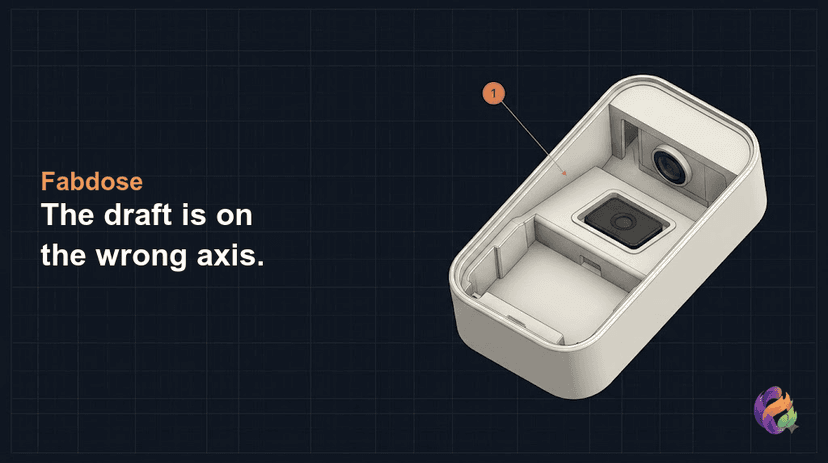
Cut a module recess square into a 15 degree shelf, add 3 degrees of draft, and fabdose still reports two undercut faces at 12.0 degrees. Three runs on one doorbell shell showing why draft measured against the face does nothing, and what it costs in tooling.
Every Fabdose Report Has a Chat Panel. Here's a Real Conversation From One.
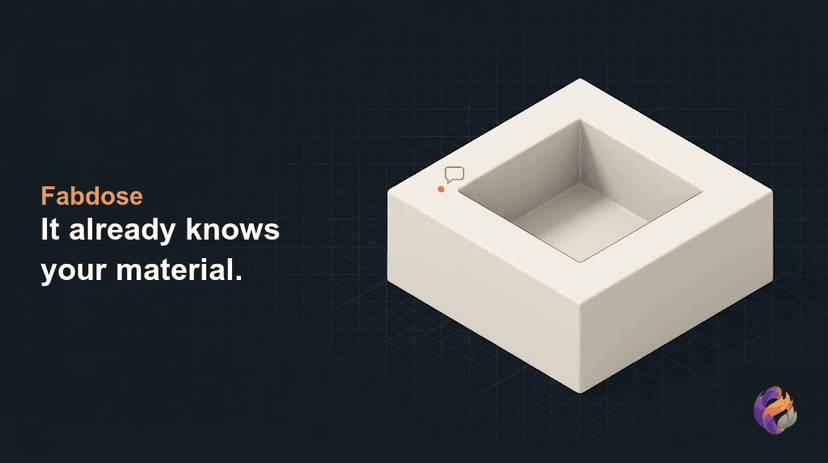
A real fabdose report, screenshotted for our store listing: a critical corner-radius warning on a CNC-machined alumina part, and the actual panel conversation that followed it, including why the finding's own EDM example doesn't hold up for this material.
How Tall Can an Injection-Molded Screw Boss Be Before the Hole Stops Filling?
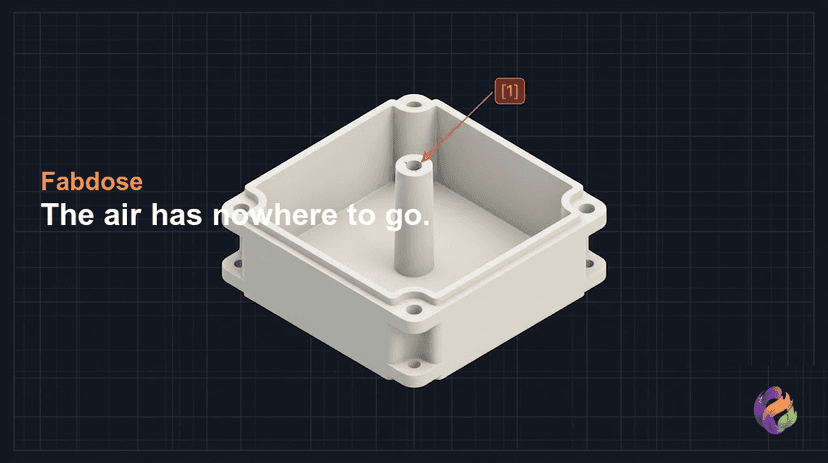
Take a screw boss from 15mm to 18mm tall and fabdose goes from saying nothing to flagging the bore at high severity. Two runs on the same housing, one variable, plus what the check does not know about the hole.
Skip the Fillet on an Internal Corner? Here's What It Does to Your Part's Strength
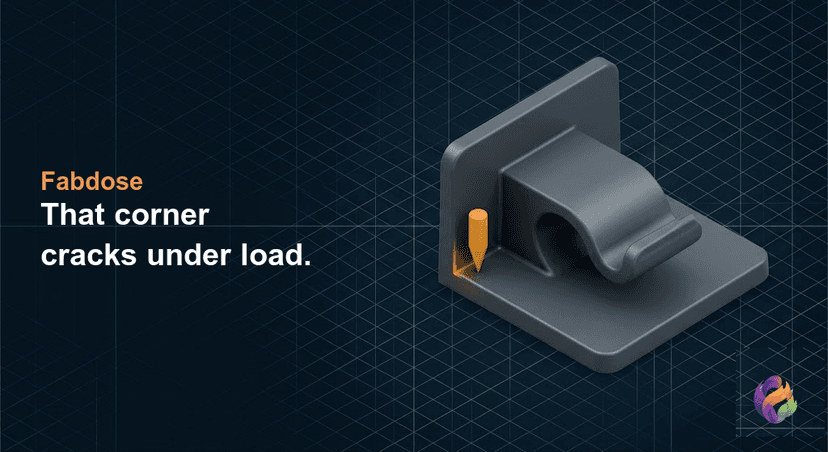
A sharp internal corner on an injection-molded part looks like a two-second CAD shortcut. It's also the single most common place plastic parts crack. A face-by-face look at what a missing fillet does, and does not, cost you.
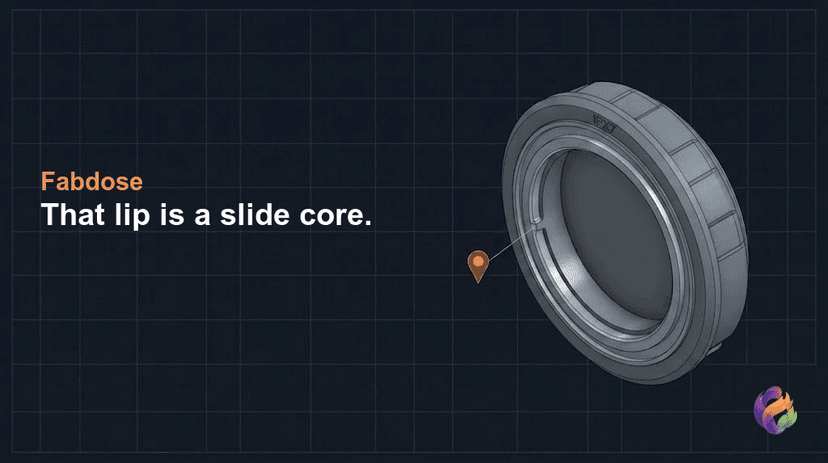
Add a Retention Lip to an O-Ring Groove? Here's What It Does to Your Mold
A small inward lip at the mouth of an O-ring groove keeps the ring from falling out during assembly. It also turns a straight-pull feature into an undercut. A face-by-face look at what changes in the mold, and in the tooling cost, when a groove gets a lip.
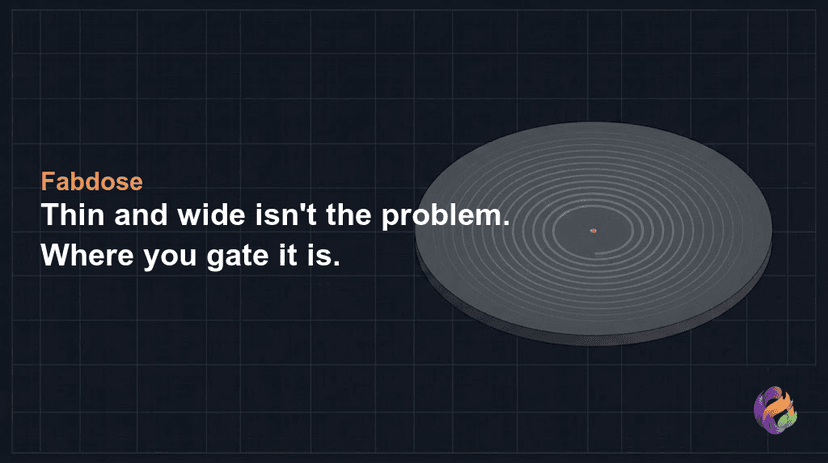
Is It Possible to Injection Mold a Thin, Wide Part? What Actually Limits It
A 2mm-thick, 30cm-wide plate looks simple, but flow length against wall thickness decides if it fills. What actually limits a thin, wide injection molded part, why uniform wall thickness beats making it thicker, and where the gate should sit.
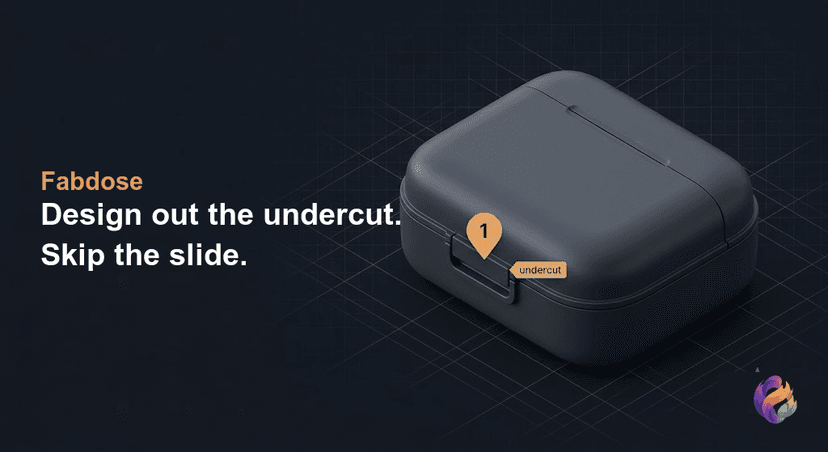
How to Eliminate Undercuts in Injection Molding Without a Side-Action Slide
An undercut forces a slide or lifter into the mold. Most can be designed out so a straight-pull tool forms the feature. Six established redesigns, the material limits for each, and how to find every undercut on your STEP file before you quote.
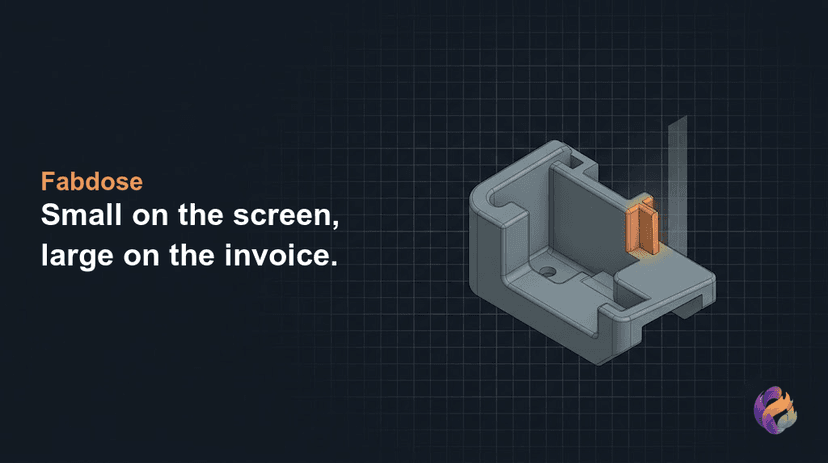
Why One Small Design Detail Can Make Your Injection Molding Quote So Much More Expensive
Why one undercut or zero-draft face can inflate your injection molding quote, the mold mechanics behind it, and how to catch the detail before your drawing goes out for quote.
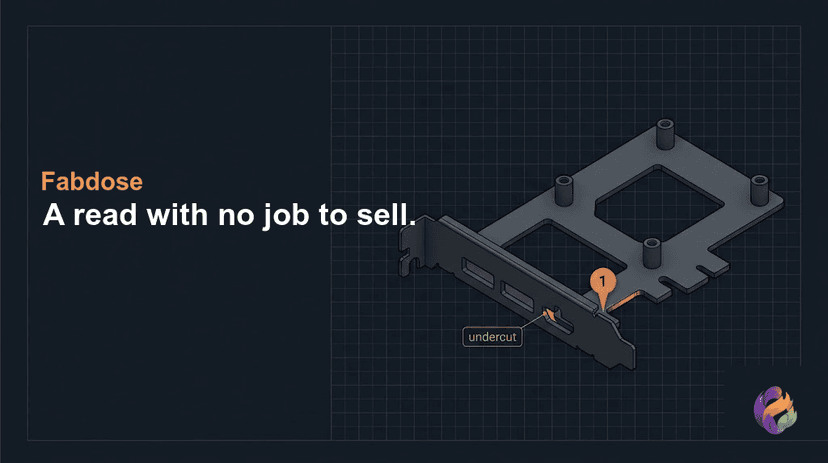
A Neutral DFM Teardown of a Real CAD Part: the Manufacturability Read That Isn't Selling You the Job
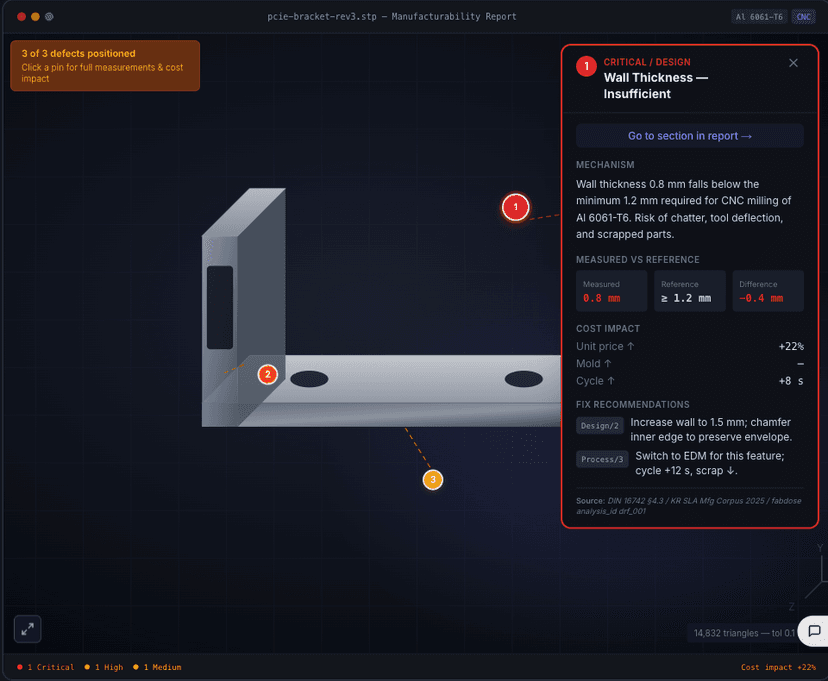
The shop that checks your CAD for free also profits from making it, so it rarely flags a cheaper redesign. Fabdose doesn't quote or sell manufacturing. It found 44 issues on a real PCIe bracket: 18 undercuts, 26 zero-draft faces, each pinned to a face ID.
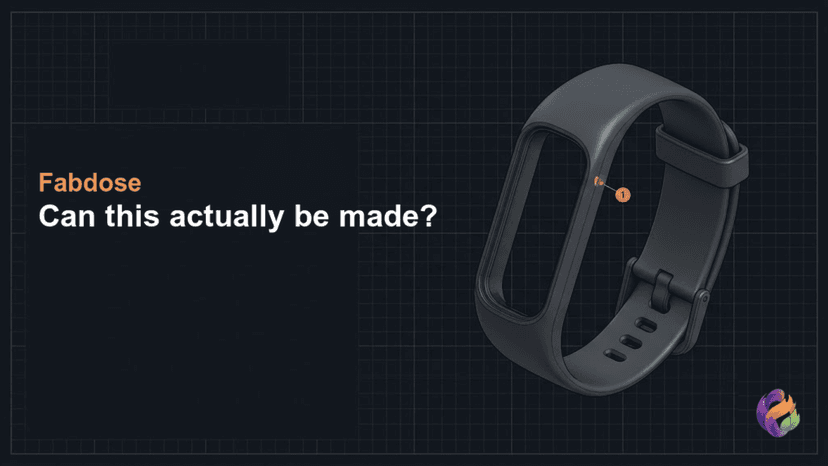
What Happens After You Send a STEP File to an Injection Molding Factory
A stage-by-stage walkthrough of the injection molding process — quote, tooling, T1 and T2 samples, production — and why your ability to change the design cheaply drops off a cliff the moment the mold steel is cut.
Draft Angles and Undercuts: What They Are and Why They Break Your Injection-Molded Part
Draft angles and undercuts are the two most common reasons an injection-molded design fails at the factory — before a single part is produced. Here is what they are, the numbers that matter, and which features in your CAD model to check first.
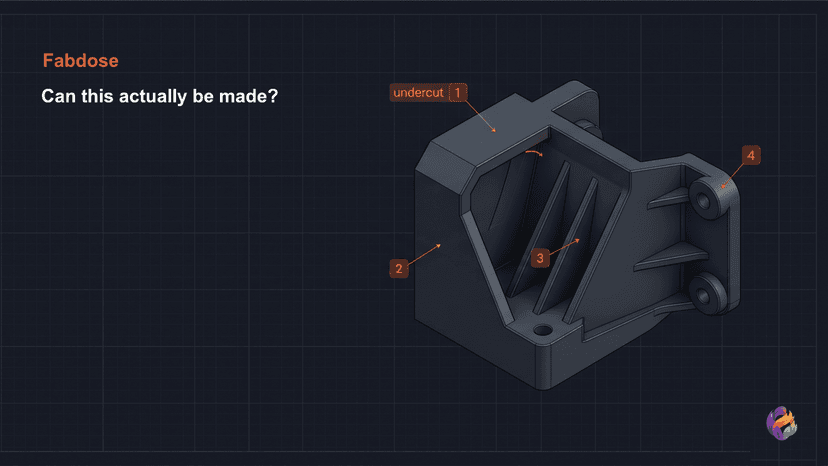
4 Injection Molding Defects Your CAD File Will Never Show You
Sink marks, weld lines, sharp corners, and air traps look fine in your STEP file. Here is why they are invisible in CAD — and why you usually do not find out until first samples arrive from the factory.
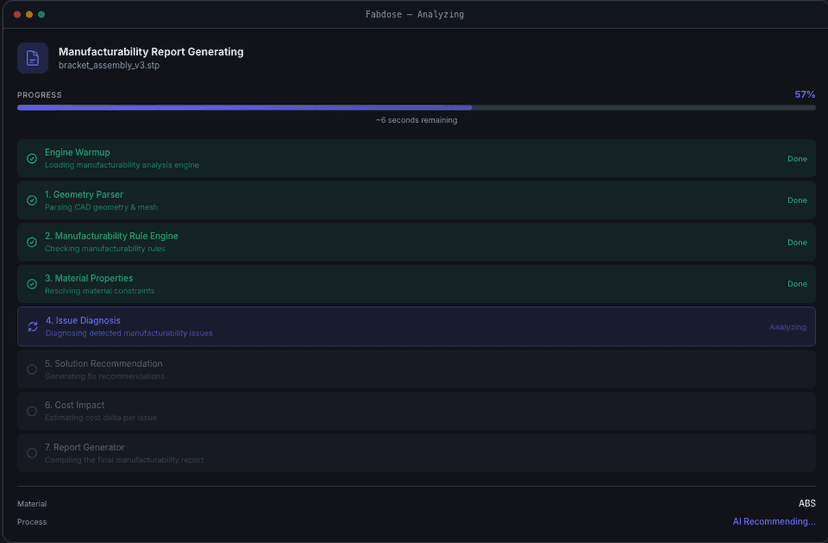
Can ChatGPT Analyze Your STEP File for Manufacturability?
ChatGPT knows DFM rules but cannot open your STEP file. Here is exactly what it can and cannot do, and what that means for product designers who need real geometry feedback.

How to Know If Your CAD Design Can Actually Be Manufactured
Before you send a STEP file to a factory, you need to know whether the geometry will actually survive manufacturing. Here is what manufacturability means for a physical part, and how to check it early.
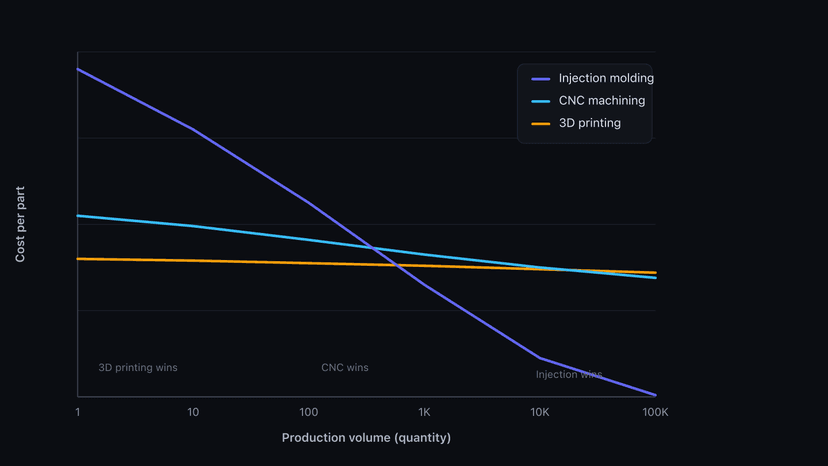
Injection Molding vs CNC vs 3D Printing: Which Process for Your Part?
A practical decision guide for product designers choosing between injection molding, CNC machining, 3D printing, and die casting — covering volume, cost, tolerance, geometry, and lead time.
Where Do Product Designers Go to Ask 'Can This Be Made?'
Product designers face a real gap: there is no fast, private, designer-friendly place to check manufacturability between design iterations. Here is an honest look at every option and what each one actually costs you.